


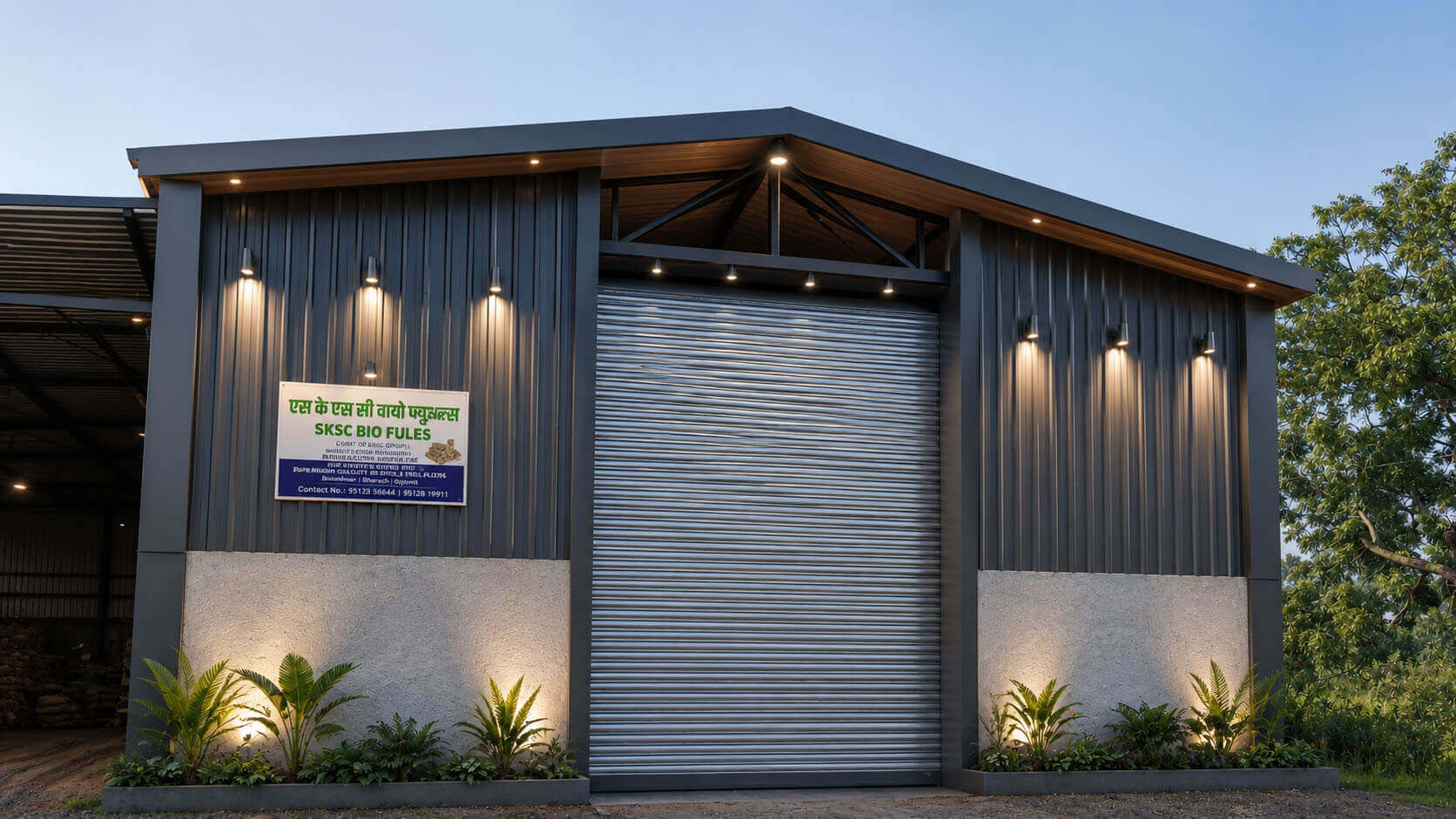
Plant 1 — Ahilya Nagar
District Ahilya Nagar, Maharashtra,
India — 414603
Biomass Briquette and Biomass Pellet Manufacturer
SKSC BIO FUELS manufactures densified biomass fuels from agricultural and forestry residues. Our process focuses on controlled raw-material preparation, efficient compaction and careful finishing to deliver briquettes and pellets suited to industrial heating, boilers and other thermal applications.
Strategically located facilities supporting biomass fuel production and supply.
Plant cells naturally contain lignin alongside cellulose and hemicellulose. Lignin does not dissolve in common organic agents and does not melt in the usual sense, but it softens when heated.
As the biomass temperature rises, the bonding ability of lignin increases. When high pressure is applied to prepared raw material, the softened lignin binds the plant fibres together and compresses them into dense briquettes without the need for additional binding agents.
Biomass briquettes are different from coal briquettes. Coal-based briquettes commonly use carbonized material and may combine coal fines with water or other ingredients in controlled proportions.
A controlled six-stage workflow designed to turn prepared biomass into durable, high-density briquettes.
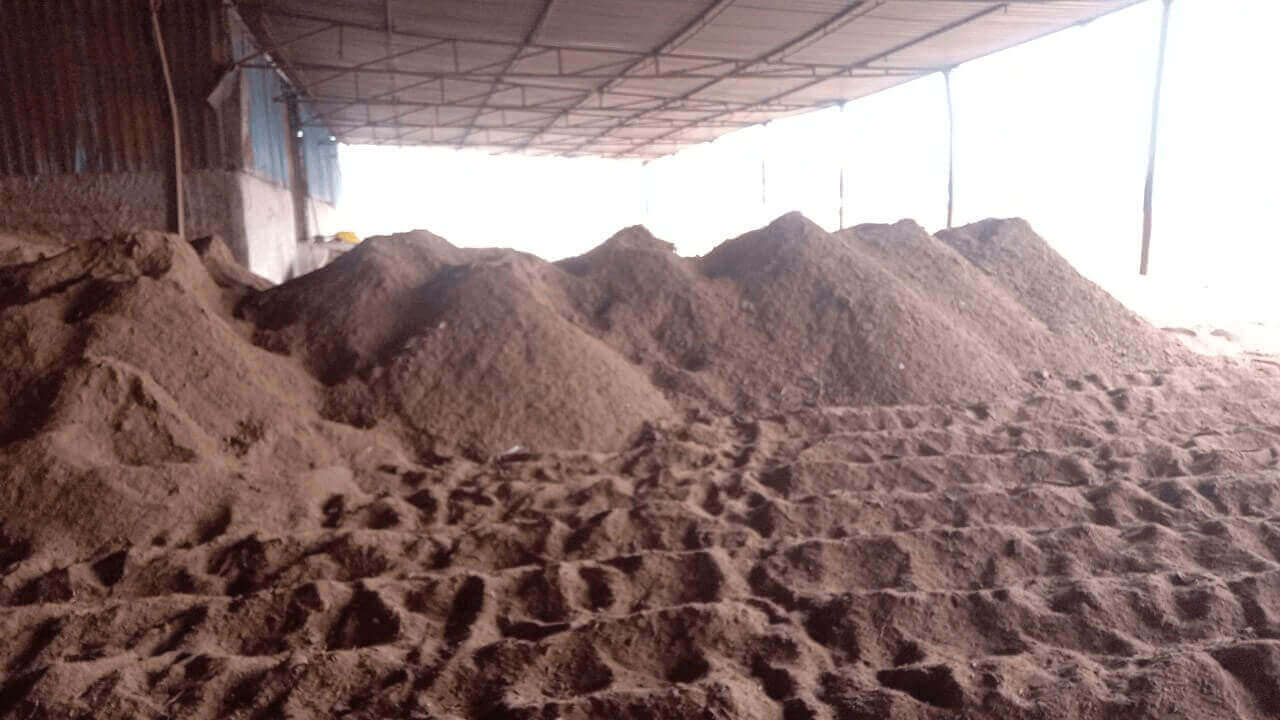
Agricultural and forestry residues are sourced in dependable quantities and stored in a dry, protected environment. Proper storage helps limit seasonal and weather-related variation and supports consistent briquette quality.
Raw material is crushed to achieve a uniform particle size suitable for compacting. Materials already available in the required powder form may proceed directly to moisture conditioning.
Moisture is reduced naturally or with mechanical dryers. Controlled moisture content improves compaction, binding and the stability of the finished briquettes.
Prepared material is compacted in a punching or screw-type briquette press. High pressure and heat soften the natural lignin, allowing it to bind the biomass without additional chemical binders.
Freshly formed briquettes are cooled before handling. Controlled cooling strengthens the product, makes it safer to handle and helps improve storage life.
Cooled briquettes are inspected and packed for clean handling, efficient storage and dependable transport to industrial users.
Biomass pellets are produced by crushing and densifying agricultural and forestry residues such as corn and wheat waste, cotton and rice residues, straw, sawdust and leaves.
Raw material passes through a screening system to remove oversized wood pieces, metal and other unwanted matter.
Screened material is conveyed to the dryer, where moisture is brought to a suitable and consistent level for pellet formation.
Moisture and fine airborne particles created during drying and conveying are separated through the cyclone system.
Prepared biomass enters the pellet mill. Pressure rollers force the material through the die, where friction and pressure form dense, uniform pellets.
Pellets leave the machine hot and comparatively soft. They are cooled to normal temperature to develop strength and protect their structure.
Finished pellets are checked, measured and packed for convenient storage, transport and use.
Share your fuel specifications, required quantity and delivery location with our team.